


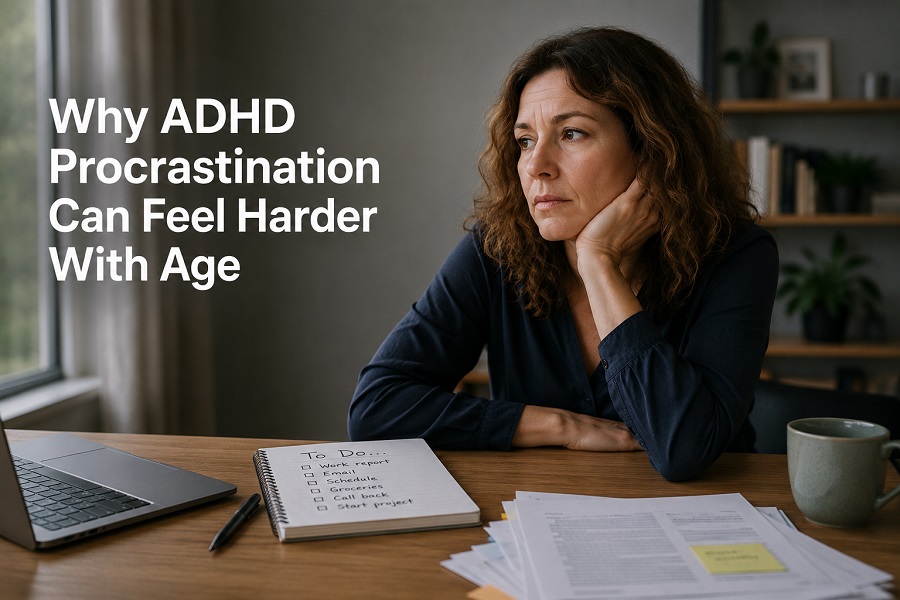
ADHD procrastination can look like laziness from the outside. A bill sits unopened. Laundry stays in the basket. A work task gets pushed to the end of the day, then the end of the week. The person may care deeply and still feel unable to start.
That is one reason people ask whether ADHD gets worse with age. The symptoms may not suddenly appear out of nowhere, but adult life can make them harder to hide. More tasks, fewer reminders, and higher stakes can turn old coping habits into daily stress.
Why ADHD procrastination can feel worse in adulthood
Adults usually have more moving parts to manage. Work deadlines, rent or mortgage payments, medical appointments, childcare, aging parents, home repairs, and long-term planning may all compete for attention.
A child with ADHD may have parents, teachers, bell schedules, homework portals, and school routines shaping the day. An adult may have to create those systems alone. When structure disappears, procrastination becomes easier to see.
The issue is not always knowing what to do. A person may know exactly which task needs attention. The hard part is starting, staying with it, and returning after an interruption.
Procrastination is often a task-starting problem
ADHD procrastination often begins before the task begins. The person may open the laptop, stare at the email, check the time, feel a wave of dread, then look for something else that feels easier.
That delay can happen even when the task is important. It can also happen when the person wants the result. Wanting the task finished does not always create enough traction to begin.
The task may feel too large
A vague task is harder to start. “Clean the house” has too many parts. “Handle taxes” has too many unknowns. “Fix the insurance issue” may involve phone calls, forms, passwords, and waiting on hold.
When the brain cannot see the first step clearly, it may avoid the whole task. That avoidance brings short relief, then guilt later.
A better first step is smaller than most people think. Open the bill. Find the login. Put the document on the desk. Write one sentence. Set a timer for seven minutes. The goal is movement, not a perfect system.
Why pressure sometimes works, until it does not
Some adults with ADHD rely on urgency. A deadline gets close, stress rises, and the task finally becomes stimulating enough to start. That can work for a while.
The cost shows up later. Last-minute work can create sleep loss, rushed decisions, missed details, and strained relationships. It can also teach the person that panic is the only reliable fuel.
That pattern becomes harder with age because adult responsibilities do not arrive one at a time. Several deadlines may overlap. A child gets sick. A car needs repair. A manager changes expectations. The old last-minute method may not carry the load anymore.
How adult responsibilities change ADHD symptoms
ADHD may feel worse when the environment becomes less forgiving. A person who managed school through late nights and high pressure may struggle when work requires long projects, quiet follow-through, and steady communication.
Home life can add another layer. Groceries, meals, dishes, bills, laundry, appointments, and family logistics repeat every week. None of those tasks may be difficult alone. Together, they create a constant demand for planning and follow-through.
The symptom did not always change, but the demand did
A person may say, “I used to handle this better.” That may be true. It may also be that earlier life gave them more structure, fewer roles, or more recovery time.
Adulthood can expose the parts of ADHD that were easier to work around before. Time blindness, distractibility, disorganization, forgetfulness, and emotional frustration can all become more visible when life asks for steady self-management.
ADHD procrastination can affect self-trust
Repeated delay does more than create practical problems. It can change how a person sees themselves.
Someone may stop trusting their own promises. They may avoid making plans because they assume they will fall behind. They may feel embarrassed by reminders from a spouse, supervisor, or friend. Over time, procrastination can start to feel like a character flaw.
That shame usually makes the pattern worse. Shame does not create structure. It drains energy and makes tasks feel heavier.
A more useful question is: what part of the task is blocking the start?
Common blockers behind ADHD procrastination
Procrastination can come from different places. Naming the blocker can make the next step clearer.
A person may be stuck because:
- The task has too many steps
- The deadline feels far away
- The task is boring or repetitive
- They do not know how long it will take
- They fear doing it badly
- They lost track of time
- They need a decision before they can move
- They feel overwhelmed by clutter or noise
Different blockers need different tools. A timer may help with boredom. A checklist may help with too many steps. A body double may help with starting. A short call or message may help when a decision is missing.
How to make starting easier
Starting should be made as frictionless as possible. That may mean leaving the bill on the keyboard, putting shoes by the door, opening the document before lunch, or writing tomorrow’s first step before ending the workday.
The first step should be physical and obvious. “Work on report” is too broad. “Open the report and write the first ugly paragraph” gives the brain something concrete to do.
Use smaller time blocks
Long work blocks can backfire. A person may avoid a task because they assume it requires two hours. A ten-minute start can lower the barrier.
Short blocks work best when they have one clear target. Sort five emails. Put ten dishes away. Review one form. Read one page. Send one reply.
Momentum often arrives after the start, not before it.
When tools and apps are not enough
Apps, planners, reminders, and timers can help, but they cannot fix every part of ADHD. A person may collect systems without using them. They may spend more time designing the tracker than doing the task.
That does not mean tools are useless. It means the tool has to match the person’s real behavior.
A planner that stays closed will not help. A reminder that appears during a meeting may disappear before it can be used. A task app with twenty categories may become another task.
Simple tools often work better. One visible list. One calendar. One place for bills. One basket for items that must leave the house. Fewer systems can mean fewer ways to lose the thread.
When ADHD procrastination needs more support
Some procrastination can improve with better structure. Other times, the pattern is causing serious problems and needs professional support.
Consider reaching out if procrastination is harming work, school, finances, relationships, sleep, or health. A clinician can screen for ADHD, anxiety, depression, sleep problems, substance use, or other factors that may be adding to the delay cycle.
People reading about ADHD procrastination are often trying to separate a real executive function struggle from the idea that they simply need more discipline. That distinction can change the whole care plan.
Treatment may include therapy, ADHD coaching, medication, skills training, workplace adjustments, or changes to sleep and routines. The right mix depends on the person and the demands around them.
FAQ
Why do adults with ADHD procrastinate so much?
Adults with ADHD may procrastinate because starting, planning, estimating time, shifting attention, and staying with boring tasks can be difficult. The delay is often tied to executive function, not a lack of care.
Does ADHD get worse with age?
ADHD does not always worsen in a straight line. It can feel worse when adult responsibilities increase, structure decreases, sleep changes, stress rises, or old coping methods no longer fit the person’s life.
Is ADHD procrastination the same as laziness?
No. Laziness suggests a person does not care. ADHD procrastination often happens even when the person cares a lot and feels distressed by the delay. The problem is usually task initiation, follow-through, or overwhelm.
What is the best first step for ADHD procrastination?
The best first step is small, visible, and easy to begin. Open the document, put the bill on the desk, write one sentence, or set a short timer. A tiny start can reduce the pressure around the full task.
Key Takeaway
ADHD procrastination can feel harder with age because life asks for more planning, follow-through, and self-management. The problem is not always that symptoms suddenly became new. The demands around the person may have grown past the systems they used before. Start with the smallest visible step, then look at whether the larger pattern needs better structure, treatment, or support.
Sources
Common Medical Questions: Does ADHD Get Worse With Age?
Common Medical Questions: ADHD Procrastination
National Institute of Mental Health: Attention-Deficit/Hyperactivity Disorder
Centers for Disease Control and Prevention: ADHD in Children