


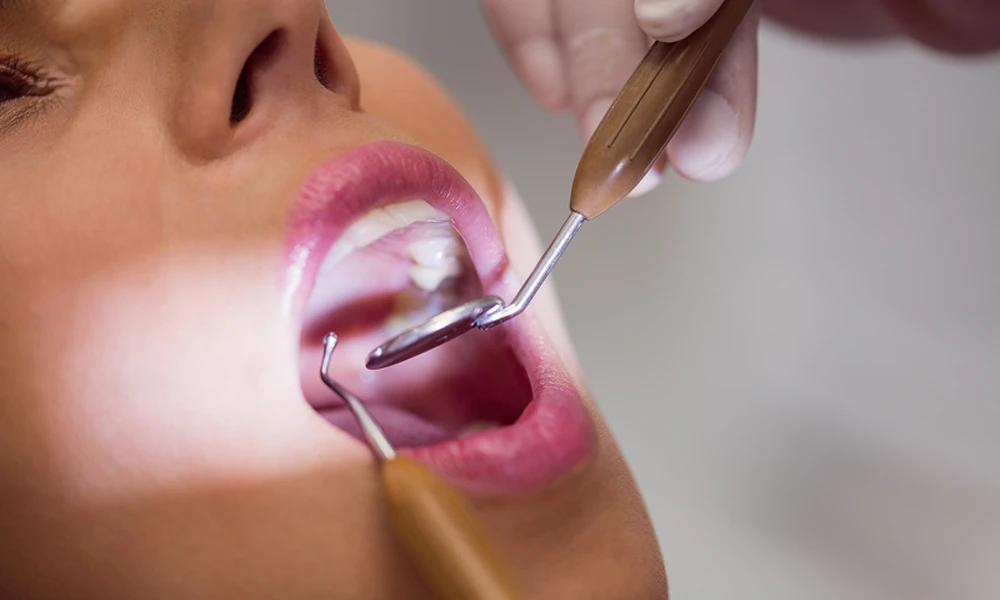
Image Recommendation: A close-up, softly lit photo of a dental mirror and probe resting beside a clean set of teeth, conveying a routine check rather than an emergency.
Pain feels like the most reliable alarm a tooth could have, the signal that something is wrong before it gets worse. For a surprising number of common dental problems, though, pain is one of the last things to show up, not the first. Decay can move through the outer layers of a tooth without triggering any discomfort at all, and by the time pain does appear, the problem has often already passed the point where the simplest treatment would have worked.
A Cracked Tooth Can Send Genuinely Mixed Signals
A cracked tooth is one of the clearest examples of how little pain level says about what’s actually happening. The pain can be sharp when biting down on one particular spot, then disappear completely between bites, which makes it easy to assume nothing is actually wrong. That on-and-off pattern is exactly what makes a crack worth getting checked rather than waiting to see if it settles, since the crack itself can keep extending even while the pain comes and goes unpredictably. If a bite suddenly feels different, or sensitivity flares without warning rather than steadily building, a same-day dental appointment is worth booking for exactly this kind of ambiguous, hard-to-read symptom, not only for obvious trauma or visible damage.
Why Enamel Can’t Send a Warning on Its Own
Enamel, and the early part of the dentin layer sitting just beneath it, have no nerve supply running through them. A cavity can work its way through both without a person feeling anything at all, simply because there’s nothing there yet to register the damage. Pain tends to appear only once decay reaches deeper structures, which means that by the time it does hurt, the problem is typically further along than the sudden onset would suggest. A chalky white spot or a small surface cavity often causes no discomfort at all, not because it’s minor, but because of exactly where it happens to sit.
Why Routine Checkups Still Matter When Nothing Hurts
This is also why routine checkups carry real weight even when nothing seems to hurt, and why finding a recommended dentist in Singapore who pays close attention to small changes that don’t yet hurt matters just as much as finding one for emergencies. So many of the problems covered here only announce themselves after the easiest window for treatment has already closed, which means the professional review during a routine visit is doing work that pain alone simply can’t do.
Gum Disease Tends to Progress the Same Quiet Way
Gum disease follows a similar pattern, typically causing little to no discomfort day to day, with symptoms usually only showing up during an acute flare-up rather than the slow build-up that leads to one. Bone loss around the teeth can happen gradually, almost millimetre by millimetre, over months or years, without any discomfort along the way, and teeth can loosen or be lost through this process without a single cavity ever forming. Bleeding gums, often dismissed as nothing more than brushing too hard, tend to be one of the only early signals available.
What a Symptom’s Intensity Doesn’t Actually Tell You
| What’s Noticed | What It Might Point To | Why It’s Still Worth Checking |
| A white or brown spot, no pain | Early decay still limited to enamel | The nerve hasn’t been reached yet, not that nothing is happening |
| Pain that comes and goes when biting | A possible crack beneath the visible surface | Inconsistent pain doesn’t mean an inconsistent problem |
| Bleeding gums, little to no pain | Possible early gum inflammation | Pain in gum disease tends to arrive only after it has progressed |
These patterns are general observations, not a diagnosis; only a dentist examining the tooth directly can work out what’s genuinely happening.
This Isn’t a Reason to Ignore Pain Either
None of this means pain should be dismissed when it shows up, or that only silent symptoms deserve attention. Persistent pain, swelling, fever, or anything disrupting eating or sleeping is still a clear signal worth acting on quickly. The point is narrower: the absence of discomfort isn’t proof nothing is going on, and waiting for it to confirm a problem can mean missing the stage where treatment would have been simplest.
What’s Worth Getting Looked at, Regardless of How It Feels
A new white spot that wasn’t there before, a bite that suddenly feels different, or a tooth that now briefly reacts to cold when it never used to, are reasonable reasons to get something checked, whether or not pain comes with them. This isn’t about treating every small change as urgent. It’s about not waiting for pain to confirm what other, quieter signs may already be pointing to.
If something about a tooth or gum has changed, whether or not it hurts, it’s worth having it looked at. Contact Canaan Dental Surgery to arrange an assessment.