


Our nails are more than just a cosmetic feature — they protect our fingertips, enhance dexterity, and can even reveal important clues about our overall health. Unfortunately, nails are also susceptible to a range of disorders collectively known as nail disease (onychosis). These conditions can affect the appearance, texture, and strength of the nails, sometimes causing pain or functional problems.
While some cases of onychosis are mild and cosmetic, others can be persistent, difficult to treat, and a source of discomfort or embarrassment. In recent years, laser therapy has emerged as a modern, non-invasive solution, especially for stubborn infections such as onychomycosis (fungal nail disease).
In this article, we’ll explore what nail disease (onychosis) is, the causes and symptoms, and how laser therapy works as an effective treatment — including its benefits, limitations, and what to expect.
Understanding Nail Disease (Onychosis)
The term onychosis comes from the Greek “onyx” (nail) and “osis” (abnormal condition). It refers to any abnormality affecting the fingernails or toenails.
Onychosis can occur in people of all ages, although certain conditions are more common in adults and the elderly.
Common Types of Nail Disease (Onychosis)
-
Onychomycosis (Fungal Nail Infection)
-
Caused by dermatophytes, yeasts, or molds.
-
Leads to nail thickening, yellow or brown discoloration, brittleness, and sometimes odor.
-
Accounts for a large percentage of nail disease cases.
-
-
Nail Psoriasis
-
Associated with the skin condition psoriasis.
-
Causes pitting, ridging, and nail separation from the nail bed.
-
May occur alongside joint pain in psoriatic arthritis.
-
-
Paronychia (Bacterial Nail Infection)
-
Usually caused by injury, moisture, or chemical exposure.
-
Results in redness, swelling, pain, and sometimes pus formation.
-
-
Trauma-Related Nail Changes
-
Damage from repetitive pressure (tight shoes, sports) or injuries.
-
May cause thickened, misshapen nails or dark streaks.
-
-
Systemic Disease-Related Nail Disorders
-
Conditions like diabetes, thyroid disorders, or vascular disease can weaken nail health.
-
Symptoms of Nail Disease
The signs of nail disease (onychosis) vary depending on the cause, but may include:
-
Discoloration (yellow, brown, white, or black spots)
-
Thickened or brittle texture
-
Pitting or ridging of the nail surface
-
Separation of the nail from the nail bed
-
Pain, swelling, or tenderness around the nail
-
Foul odor in severe infections
Early diagnosis is important — nail problems that persist for more than a few weeks should be evaluated by a healthcare professional.
Traditional Treatments for Nail Disease
Historically, nail diseases have been treated using topical medications, oral drugs, and in some cases, surgical removal of the affected nail.
-
Topical Antifungal Creams and Lacquers
Useful for mild fungal infections but often slow to work.
Penetration into the nail plate is limited. -
Oral Medications
Such as terbinafine or itraconazole, which can be effective but carry the risk of side effects, including liver toxicity. -
Nail Debridement or Surgery
Physically removing diseased nail tissue, sometimes combined with medication.
While these approaches can work, they often require long treatment periods and may not always prevent recurrence.
The Rise of Laser Therapy
In recent years, laser therapy has become a popular alternative or complementary treatment for nail disease (onychosis).
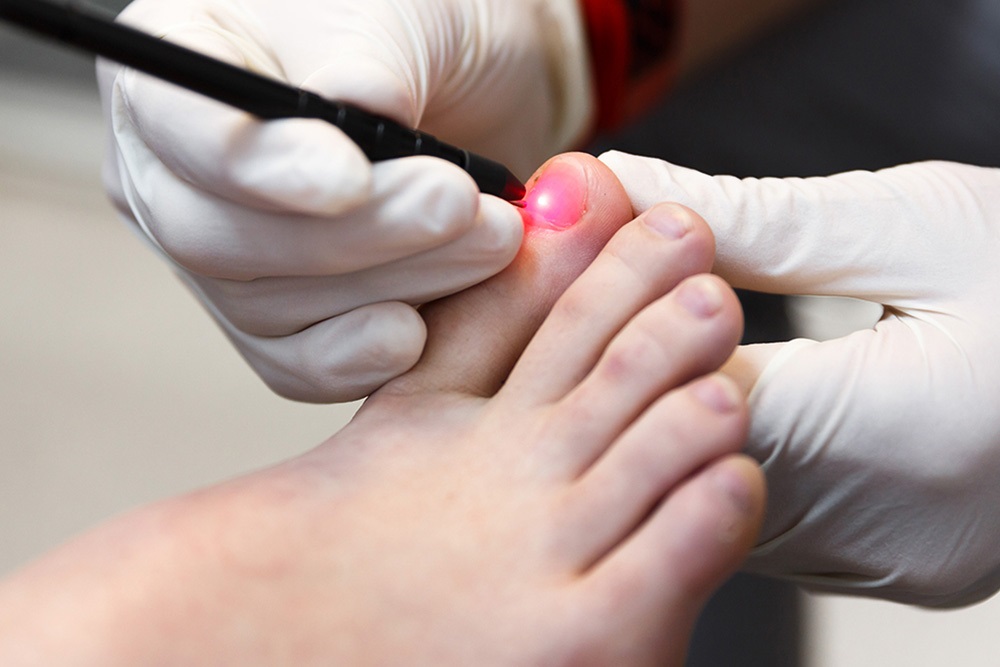
It uses focused beams of light to penetrate the nail and target the microorganisms causing the infection, without harming the surrounding tissue.
How Laser Therapy Works
-
Diagnosis and Evaluation – The specialist confirms the type of nail disease and ensures the patient is a good candidate.
-
Preparation – Nails are cleaned and trimmed for optimal laser penetration.
-
Laser Application – Pulses of light are directed at the affected nails, heating and destroying fungal or bacterial cells.
-
Aftercare – Patients may be given topical treatments or preventive advice to avoid reinfection.
Benefits of Laser Therapy for Nail Disease (Onychosis)
-
Non-invasive – No incisions or anesthesia required.
-
Minimal Discomfort – Most patients describe a warming sensation rather than pain.
-
Quick Sessions – Treatments typically last 15–30 minutes.
-
No Downtime – Normal activities can be resumed immediately.
-
Few Side Effects – No risk of systemic drug reactions.
-
Effective for Stubborn Infections – Can work even when topical or oral treatments fail.
Limitations and Considerations
Laser therapy is not always a one-session cure — most patients require multiple treatments spaced weeks apart.
The success rate can vary depending on:
-
The severity and duration of the disease
-
The patient’s overall health and immune system
-
Post-treatment care and prevention
Cost of Laser Therapy for Nail Disease
The cost of laser therapy for nail disease (onychosis) varies depending on:
-
Number of nails treated
-
Clinic location and reputation
-
Technology used
-
Number of sessions required
Prices may range from a few hundred to over a thousand dollars for a full course of treatment. While often considered a cosmetic procedure (and not always covered by insurance), many patients find it a worthwhile investment for permanent nail restoration.
Preventing Recurrence After Laser Therapy
To maintain results:
-
Keep nails clean and dry.
-
Wear breathable socks and shoes.
-
Avoid sharing nail tools or footwear.
-
Disinfect household surfaces that may harbor fungi.
-
Continue preventive topical treatments if recommended.
When to See a Specialist
You should consult a dermatologist or podiatrist if:
-
You notice persistent nail discoloration or thickening.
-
The nail becomes painful or detaches from the nail bed.
-
There is swelling, redness, or pus.
-
You have diabetes or poor circulation and notice nail changes.
💡 Want to learn more about nail disease (onychosis), its causes, and treatment options?
Visit Tabeebo.com’s Nail Disease (Onychosis) page to find detailed information and connect with specialists who can diagnose your condition and provide effective solutions.
Final Thoughts
Laser therapy offers a safe, quick, and effective option for treating nail disease (onychosis), especially for stubborn fungal infections that resist conventional treatment. While it may not replace traditional therapies in every case, it is an excellent alternative for patients seeking faster results with minimal side effects.
With proper diagnosis, treatment, and prevention, healthy nails can be restored — improving not only appearance but also comfort and confidence.